Tissue dissociation methods are critical for advancing organoid research, an area that investigates 3D cellular structures derived from stem cells or tissues. By enabling the breakdown of tissues into single-cell suspensions, these methods facilitate the study of cellular behavior, interactions, and differentiation. Understanding how tissue dissociation contributes to organoid development is essential for researchers aiming to harness these structures for applications in drug development, disease modeling, and regenerative medicine.
The Role of Tissue Dissociation in Organoid Formation
The process of tissue dissociation is fundamental for producing single-cell suspensions, which are essential for creating organoids. This preparation involves breaking down tissues to release individual cells while maintaining their viability. The tissue dissociation single cell approach allows researchers to isolate specific cell types that can then be cultured to form organoids, replicating the tissue architecture and function more closely than 2D cultures.
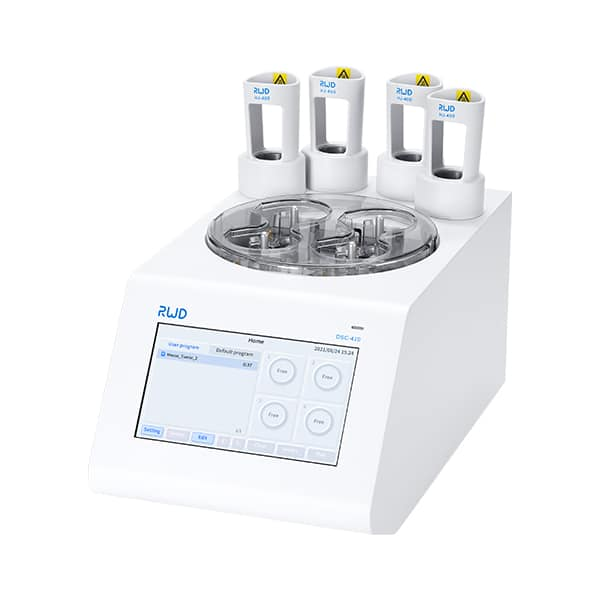
For instance, the RWD tissue dissociator is specifically designed to facilitate tissue processing, achieving high cell viability within a short timeframe of 15-30 minutes. Equipped with four independent working channels, this instrument can process multiple tissue samples simultaneously, making it a versatile tool for organoid research. It is suitable for various tissues, including brain tumors, neural tissues, and other organs, highlighting its adaptability in different research contexts.
The importance of accurate tissue dissociation methods cannot be overstated; they significantly enhance the reproducibility of experiments. By using optimized programs and specialized tissue dissociation kits, researchers can ensure consistent results across different trials. This reliability is crucial when translating findings from organoid studies to potential clinical applications.
Enhancing Experimental Efficiency with Automated Systems
Automated tissue dissociation systems, such as those provided by BPLabLine, streamline the preparation of single-cell suspensions by incorporating heating jackets. These features eliminate the need for time-consuming water baths while ensuring that the cells remain viable during the dissociation process. Efficient tissue processing is essential when generating organoids, as quicker preparation times help preserve the character and function of the cells involved.
Additionally, these systems allow for the customization of protocols, enabling researchers to adjust parameters according to the specific tissue types being used. This flexibility ensures that even challenging samples can be processed effectively, supporting a wide range of applications, from drug development to single-cell sequencing.
The accessibility of user-friendly interfaces further enhances the usability of tissue dissociation equipment. With touch-screen controls and one-touch operation for preset or custom processing programs, researchers can conduct their experiments with greater ease and confidence.
Advancing Organoid Research Through Tissue Dissociation
In summary, tissue dissociation methods are integral to organoid research, providing essential single-cell suspensions that allow for advanced study of cellular behavior and function. Instruments like the RWD tissue dissociator significantly enhance the efficiency and reproducibility of these processes.
By utilizing specialized tissue dissociation techniques, researchers can develop organoids that closely mimic in vivo conditions, paving the way for breakthroughs in drug development, disease modeling, and regenerative medicine. As the field continues to evolve, the role of efficient tissue dissociation methods will remain central to the advancement of organoid research, driving innovation and improving outcomes in various biomedical applications.
