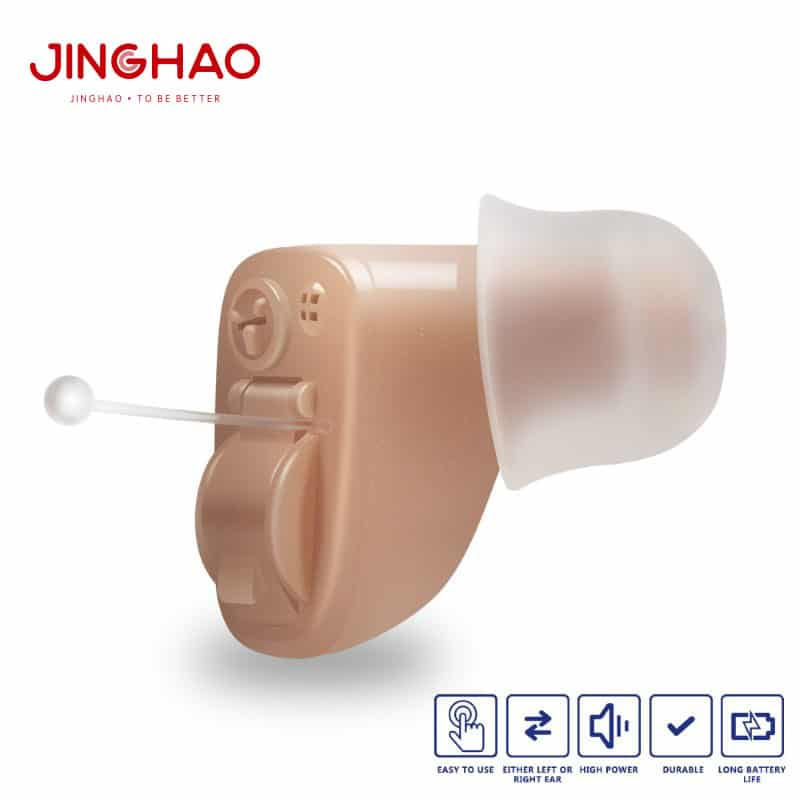
Analog hearing aids represent one of the earliest and most straightforward forms of hearing assistance technology. Their operation is akin to a basic microphone-and-speaker system: they capture ambient sound through a microphone, uniformly increase its volume via an amplifier, and then deliver the amplified sound directly to the ear. Crucially, this process does not involve altering or processing the original acoustic signal in any fundamental way.
This stands in direct contrast to modern digital devices, which convert sound into digital code for sophisticated manipulation. The defining characteristic of analog hearing aids is their faithful preservation of the original sound waveform. For some users, this results in a listening experience perceived as more “natural” or “warm,” particularly in quiet environments where sound modification is less critical. The appeal of these devices often lies in their operational simplicity, ease of use, and generally lower cost compared to their digital counterparts. While they lack advanced features like noise reduction or frequency-specific tuning, analog hearing aids continue to be a valued choice for individuals seeking an uncomplicated, reliable solution for amplifying sound without complex digital processing.
Advantages of Using Analog Hearing Aids
A primary advantage of analog hearing aids is their cost-effectiveness. These devices are generally offered at a more accessible price point than advanced digital models, making them a financially practical entry into hearing assistance. Furthermore, due to their less complex circuitry and lower power consumption for basic amplification, analog hearing aids often provide extended battery life when operating at comparable output levels, reducing long-term maintenance costs and frequency of battery changes.
The engineering ethos behind these devices prioritizes simplicity and unwavering reliability. By utilizing a minimalistic component architecture and intentionally straightforward functionality, they deliver consistently dependable performance with little required maintenance or technical interaction. This “no-fuss” operational approach holds particular appeal for users seeking an easy-to-operate hearing solution that functions effectively without complex programming, smartphone apps, or frequent digital fine-tuning. Such inherent reliability establishes these devices as a well-suited choice for stable listening environments and for individuals whose preferences align with straightforward, durable, and intuitively managed assistive technology.
Sonically, analog hearing aids deliver sound that is amplified but not digitally altered. Many users and audiologists describe this output as having a “warmer” and more “natural” tonal quality compared to the processed sound of digital aids. For listeners accustomed to the nuances of natural acoustics—particularly in music appreciation or quiet conversations—this unprocessed sound signature can offer a subjectively more comfortable and pleasing auditory experience, contributing to their enduring appeal in a niche segment of the market.
Why Choose JINGHAO Analog Hearing Aids?
In the realm of analog hearing aids, JINGHAO has established itself as a manufacturer synonymous with reliability and consistent quality. The brand offers a diverse portfolio of analog hearing aid models, each built on a foundation of time-tested amplification technology designed for straightforward operation. These devices are engineered to provide dependable performance, delivering clear and natural sound amplification that helps users engage more effectively in a variety of everyday listening situations.
JINGHAO analog hearing aids are particularly valued for their user-centric design, which prioritizes simplicity and hassle-free use. This makes them an accessible and practical choice for individuals who are new to hearing assistance, as well as for those who prefer a trusted, no-frills solution without complex digital features or programming requirements. By focusing on core amplification reliability, ease of handling, and enduring battery efficiency, JINGHAO ensures that its analog devices offer an excellent balance of performance and practicality. For anyone seeking an uncomplicated, effective, and trustworthy entry into better hearing, JINGHAO analog hearing aids represent a sound and sensible option.
Conculsion
Analog hearing aids represent a foundational category of hearing assistance technology. Functioning on a straightforward principle, these devices capture ambient sound through a microphone and uniformly amplify the entire acoustic signal without digitally processing or altering its fundamental characteristics. This approach results in an output that many users describe as natural and warm, as it preserves the original tonal qualities of the sound.
The enduring appeal of analog hearing aids is often attributed to several practical advantages. Their simpler internal circuitry typically translates to a more accessible price point compared to advanced digital models, making them a cost-effective choice. Furthermore, this less complex operation generally demands less power, frequently leading to longer battery life and reduced maintenance frequency. The overall design philosophy emphasizes ease of use, reliability, and a no-fuss user experience, free from the need for programming or digital adjustments.
Within this traditional yet valued segment, JINGHAO has positioned itself as a provider of dependable solutions. The brand’s analog hearing aids are engineered to deliver consistent performance and clear amplification by leveraging proven, robust technology. By focusing on core quality, comfortable fit, and reliable sound delivery, JINGHAO ensures these devices offer users a straightforward and effective path to improved hearing, making them a trusted option for individuals who prioritize simplicity, value, and a natural listening experience in their daily lives.
