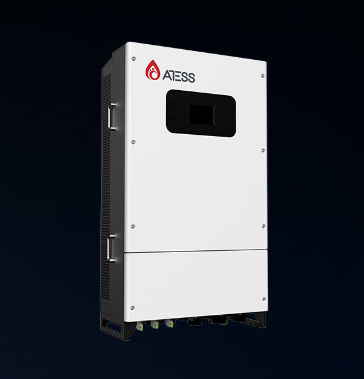
For energy professionals assessing infrastructure investments, the financial justification for solar plus storage often hinges on equipment that delivers performance over a full operational lifecycle. Atess presents a range of power solutions spanning 5kW to 150kW, positioning their hybrid inverter as a core component for applications from small commercial facilities to MW-scale industrial installations. A well-specified solar hybrid inverter offers measurable returns across multiple operational metrics.
Financial returns from energy bill reduction
The primary value driver for any hybrid inverter lies in electricity cost avoidance. By storing excess daytime solar generation in batteries, these systems significantly reduce grid electricity purchases during peak pricing hours. For commercial and industrial facilities, which Atess targets with their higher-power units, the financial case is especially compelling—most large buildings see payback periods between three to six years. A properly configured solar hybrid inverter generates savings that compound annually as utility rates rise.
Backup reliability as an operational asset
Beyond routine cost reduction, these systems provide a critical value layer: power outage protection. Traditional grid-tie inverters cease operation entirely during grid failures, but a hybrid inverter automatically transitions to off-grid mode within 10 milliseconds when grid power drops. Atess’s units achieve this seamless switching while managing power flow between PV arrays, batteries, loads, and the grid. For businesses where downtime carries significant financial consequences, this backup capability functions as an insurance policy with positive cash flow.
System flexibility for evolving needs
A well-designed solar hybrid inverter accommodates future expansion without equipment replacement. Atess’s units can operate without batteries in grid-connected mode initially, converting solar DC to AC for load consumption or export, with battery functionality added later. This modular approach preserves capital until storage becomes economically advantageous. Industry data indicates a typical hybrid inverter lifespan of 10 to 15 years, providing ample window for incremental system upgrades. For engineers evaluating long-term energy infrastructure, the hybrid inverter represents a foundation capable of evolving alongside shifting operational requirements and tariff structures.
