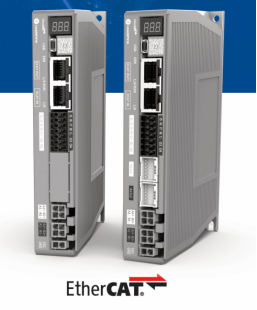
Stepper motor technology has long been a fundamental pillar of industrial automation, prized for its precision, simplicity, and excellent torque at low speeds. The true potential of this technology, however, is unlocked by the modern stepper drive, the sophisticated electronic controller that governs the motor’s performance. While beneficial across automation broadly, certain industries derive disproportionately high value from the unique capabilities of contemporary stepper drive systems. These sectors typically involve applications requiring high-volume production, precise point-to-point movement, coordinated multi-axis tasks, and rigorous cost control. As a major global designer and manufacturer, Leadshine supplies advanced stepper drives to a vast array of these industries, with their products, including high-performance EtherCAT stepper motor driver models, delivering critical advantages in reliability, efficiency, and integration that directly address sector-specific challenges.
Packaging, Bottling, and Material Handling
The packaging industry is a prime beneficiary of stepper drive technology, driven by relentless demands for speed, flexibility, and uptime. Applications such as filling, capping, labeling, cartoning, and palletizing rely on precise linear and rotary indexing. Modern stepper drives excel here due to their ability to execute complex, repetitive motion profiles reliably. For instance, Leadshine’s EM2RS Series drives with built-in Position Register (PR) mode can store multi-step sequences, allowing standalone operation for tasks like placing items into boxes—reducing the load on the main controller. Furthermore, the industry’s shift towards modular and compact machinery is perfectly served by integrated solutions like Leadshine’s 2EM3E Series dual-axis EtherCAT stepper motor driver. A single unit controlling two axes saves over 50% panel space compared to two single drives and reduces network complexity, which is invaluable for high-density packaging lines with dozens of actuators. The reliability and smooth motion (“low noise and vibration”) of these drives ensure consistent operation at high cycle rates, minimizing downtime in 24/7 production environments.
Textile and Apparel Manufacturing
The textile sector, encompassing weaving, knitting, embroidery, and fabric handling, heavily depends on precise motion control for tension management, pattern accuracy, and sequential operations. Stepper drive technology is critical for providing the controlled, incremental movements needed to guide threads and fabrics. In these applications, smooth operation is paramount to prevent yarn breakage or fabric damage. Drives like Leadshine’s EM3E Series are engineered for “low noise and vibration, smooth motion,” directly contributing to higher-quality textile output and reduced machine wear. The industry also benefits from the networking capabilities of modern drives. An EtherCAT stepper motor driver, such as the CS3E Series, allows multiple axes on a large loom or embroidery machine to be synchronized with microsecond-level precision over a single cable, enabling the creation of complex, flawless patterns. This level of coordinated control, made simple and cost-effective by advanced stepper drive systems, is a key enabler for modern textile automation.
Semiconductor, Electronics, and 3C Assembly
The assembly of semiconductors, printed circuit boards (PCBs), and consumer electronics (3C) is a domain where precision, miniaturization, and reliability are non-negotiable. Stepper drive technology is ubiquitous in machines for component placement, screw driving, precision dispensing, testing, and microscope stage movement. These applications often require sub-micron accuracy and extremely smooth motion profiles. Here, the advantages of closed-loop stepper drives become particularly significant. For applications requiring networked coordination, an EtherCAT stepper motor driver provides the deterministic, high-speed communication needed to synchronize a pick-and-place gantry with a conveyor or other peripherals. The compact form factor of many Leadshine drives also aligns with the space-constrained design of cleanroom-compatible and benchtop electronic assembly equipment, making the stepper drive a foundational component in this high-tech industry.
Medical Device Manufacturing and Laboratory Automation
Industries where hygiene, reliability, and precision directly impact health outcomes derive immense value from robust motion control. In medical device manufacturing and diagnostic laboratory automation, stepper drives control fluid handling pumps, vial handling, pipetting systems, and imaging device positioning. The key benefits here are reliability, quiet operation, and cleanliness. A drive failure could halt critical diagnostic work or production. Leadshine’s emphasis on product reliability and protections (over-voltage, over-current) ensures consistent operation. The smooth, low-vibration motion reduces splashing in fluid handling and increases the longevity of sensitive mechanical components. For complex analyzers with multiple modules, a networked EtherCAT stepper motor driver simplifies system integration, allowing a central controller to manage dozens of motion axes and data points efficiently. The deterministic nature of EtherCAT ensures timing-critical processes are maintained, which is essential in automated diagnostic sequencing.
General Industrial Automation, CNC, and Robotics
In conclusion, while stepper drive technology offers universal benefits, industries characterized by high-volume precision motion, multi-axis coordination, and stringent cost-performance ratios gain the most substantial competitive edge. From ensuring label accuracy on a speeding bottling line to placing microscopic components on a PCB, the modern stepper drive is an indispensable workhorse. Leadshine, through its extensive portfolio, the feature-rich EM2RS, provides tailored solutions that address the specific pain points of these diverse sectors. By delivering reliability, integration, and efficiency, their stepper drives empower manufacturers across these key industries to build more capable, productive, and profitable automated systems.
