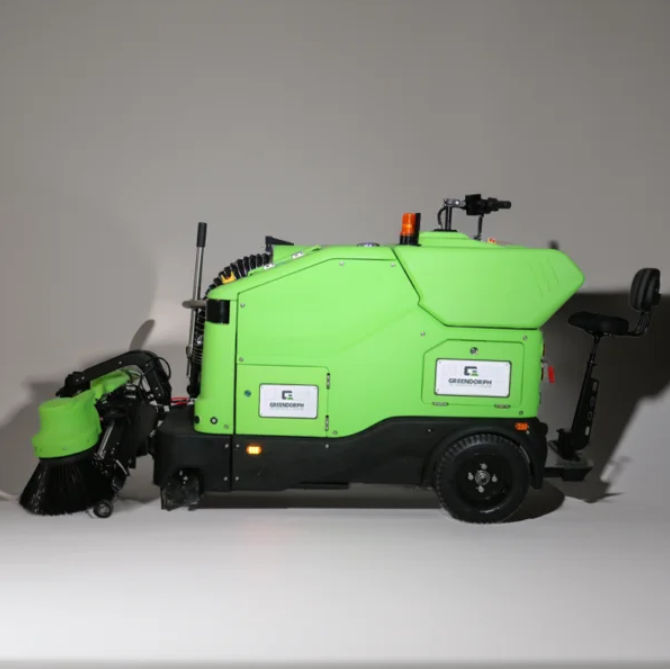
Road cleaning changes from one site to another. Municipal streets may collect leaves, dust, paper, and small stones, while commercial roads often pick up sand, packaging scraps, and dirt carried by vehicles. Traffic volume, road width, nearby buildings, and cleaning frequency also affect the work.
For contractors, facility teams, and public-service operators, equipment selection should start with these conditions. Cleaning methods, machine size, and working time should match the route. This helps show where powered sweeping equipment is practical and where manual work is still needed.
Public Roads Have Repeated Cleaning Demands
Urban roads need regular removal of loose debris before it spreads into drains, pedestrian areas, or nearby properties. A ride on sweeper can suit service roads, residential streets, and other paved routes where crews need to cover longer distances while remaining seated.
Road width and traffic flow should guide the choice. Narrow lanes and streets with parked vehicles require tighter turning space. Wider routes may place more emphasis on coverage and collection capacity. Dry conditions can also increase airborne dust, so water spraying or dust-suppression functions may become useful.
The debris itself matters. Fine dust, wet leaves, gravel, and lightweight litter do not behave in the same way. Cleaning teams should consider whether sweeping, suction, flushing, or targeted collection is better suited to the material found on their routes.
Commercial Roads Create Concentrated Dirt Zones
Commercial sites often include warehouse entrances, loading areas, office parks, logistics yards, internal roads, and parking approaches. Dirt usually builds up near gates, curbs, vehicle paths, and loading points. These areas may need cleaning before deliveries begin or after peak traffic has passed.
For buyers comparing a ride on sweeper for sale, route conditions are more useful than judging equipment from a general specification sheet. Useful checks include route length, turning space, slopes, expected debris, charging arrangements, operator hours, and storage space. These details show whether a machine fits one continuous route or several smaller zones.
Cleaning frequency should reflect how quickly dirt returns. A logistics entrance with frequent truck movement may need more attention than an office access road. Planning around actual buildup can reduce unnecessary passes and help crews use working time more efficiently.
Tight Areas Put More Pressure on Maneuverability
Road cleaning often extends into sidewalks, pedestrian plazas, parking structures, and medium-sized outdoor areas. Columns, benches, curbs, parked vehicles, and planters can reduce available turning space. In such locations, a compact footprint may be more useful than a wider machine that is difficult to position.
This is one reason Greendorph offers the Omniclean Urban Street Sweeper YJ80 with three operating modes: manual operation, auto-follow, and towed traction. They give crews different ways to move the unit through urban cleaning routes instead of using one operating pattern across different spaces.
The YJ80 combines vacuum collection, high-pressure flushing, water-spray cleaning, turbine blowing, targeted tube collection, and dust-suppression misting. These functions address several common cleaning tasks in one compact unit. Its size is intended for locations such as sidewalks, pedestrian plazas, parking structures, and other areas where maneuvering room is limited.
Longer Routes Depend on Runtime and Scheduling
Battery runtime affects how a cleaning route is planned. Frequent charging stops can interrupt work when crews need to finish streets before traffic increases or clean commercial areas before normal operations begin. Buyers should therefore compare expected route time with available operating time.
The YJ80 provides up to eight hours of runtime on one charge. Its electric operation is near-silent and produces zero emissions at the point of use. Those characteristics can be relevant around offices, pedestrian areas, parking structures, and other spaces where noise and exhaust need closer consideration.
A ride on sweeper can also be used across connected cleaning zones. A crew might begin in a parking area, continue along an internal road, and finish at a plaza. Even when one machine covers those areas, operators still need to adjust the cleaning method to the debris and surface.
Site Surveys Make Equipment Comparisons More Useful
Before purchasing equipment, buyers can complete a basic site survey. They should record road width, surface type, debris categories, route distance, slopes, working hours, water access, charging points, storage space, and narrow entrances. Shared pedestrian areas or ramps should also be included.
When evaluating a ride on sweeper for sale, these observations can be compared with the machine’s actual functions. Suction may matter more for fine dust, flushing can help with adhered dirt, and targeted collection can help remove concentrated waste. The useful function depends on the recurring cleaning problem.
For B2B projects, Greendorph positions the YJ80 for urban routes that need compact movement and several cleaning methods. They help buyers assess whether its operating modes, cleaning functions, runtime, and footprint match the routes their crews handle rather than treating one machine as suitable for each paved area.
Balancing Performance Requirements with Operating Conditions
Outdoor cleaning projects often involve different challenges, from changing surfaces to different levels of waste accumulation. Buyers need to consider how equipment performance matches the working environment, including cleaning capacity, movement flexibility, and daily operating arrangements.
For procurement teams and facility managers, equipment evaluation should connect technical details with actual usage scenarios. A practical comparison helps identify suitable solutions based on site requirements, rather than focusing only on individual specifications or additional functions.
