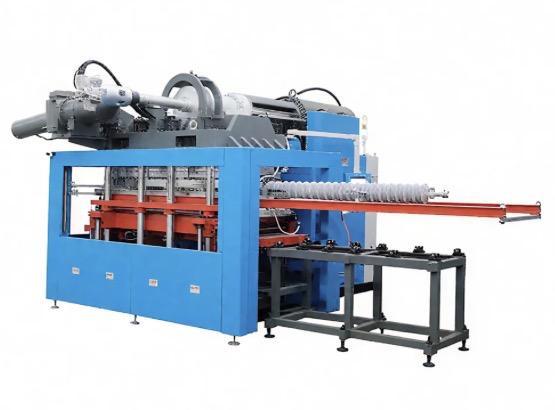
Industrial manufacturing enterprises continually seek strategic operational methods to enhance production efficiency, minimize material waste, and elevate product consistency across high-volume polymer processing lines. Plant managers, plant engineers, and technical directors frequently ask: How do automated production systems impact material consistency and throughput in high-volume elastomer manufacturing?
Transitioning from traditional manual or semi-automated equipment to advanced automated machinery represents a pivotal step for facilities seeking to scale their industrial output without compromising quality benchmarks.
Additionally, decision-makers look for verified compliance and robust structural builds that withstand rigorous plant conditions. When evaluating potential equipment partners, procurement teams often examine suppliers such as HWAYI, which operates across multiple regions and offers CE-certified production solutions with supporting technical services.
In the current era of smart manufacturing transformation, labor shortages and unstable manual operation quality have become common pain points for rubber processing factories. Fully automatic molding systems can help address such industry bottlenecks through unmanned cyclic operation, supporting higher production consistency and advancing overall factory automation.
How Automation Reshapes Traditional Rubber Molding Workflows
The integration of modern automation into elastomer production lines fundamentally transforms factory workflows and operational dynamics. Traditional presses often rely heavily on manual operator intervention for mold loading, raw material positioning, and demolding, introducing potential variables that can affect cycle times and part uniformity.
In contrast, an advanced rubber injection molding machine incorporates programmable logic controls, automated material feeding systems, and precise hydraulic actuation to streamline every phase of the molding cycle. This high level of factory automation tends to cut human-induced deviations, improve energy efficiency, and support consistent dimensional control across batches, while preserving production throughput and operational safety.
Furthermore, when technical teams evaluate equipment upgrades, reviewing resources such as an informative guide on How to Choose Rubber Injection Machine helps clarify critical performance benchmarks and selection criteria. Automated operation helps standardize production parameters and reduces batch variations stemming from inconsistent manual work, supporting more stable pass rates during extended mass production runs.
Key Technical Criteria for Selecting Qualified Molding Equipment
Selecting the right production equipment requires careful consideration of clamping forces, injection pressures, and thermal regulation capabilities to match specific polymer compounds. Plant engineers often review a range of technical parameters ahead of equipment investment decisions to support smoother integration with existing plant workflows.
Utilizing a dependable rubber injection moulding machine enables manufacturers to maintain stable cavity pressure and accurate temperature control, which prevents internal voids and surface defects during continuous, high-pressure industrial operation.
Operational flexibility remains a core priority when integrating new hardware into existing plant layouts. Modern manufacturing facilities often handle a diverse range of elastomer formulations, varying from general-purpose compounds to specialized high-performance polymers.
A versatile press provides the adjustable parameters necessary to accommodate shifting production demands without requiring excessive reconfiguration downtime. Technical specialists also assess hydraulic stability and servo-based energy-saving features to support favorable long-term operating economics. Flexible parameter adjustment functions enable the equipment to adapt to small-batch, multi-variety customized orders, helping improve factory production flexibility and market responsiveness.
Performance and Quality Benefits for Automotive Industrial Production
Real-world application scenarios clearly demonstrate the practical advantages of automated production systems in demanding industrial environments. Within the modern automotive aftermarket sector, manufacturers face stringent demands when producing components such as sealing strips, dust boots, door seals, and O-rings.
These critical automotive parts need reliable tensile strength, flexibility, and resistance to harsh environmental stressors found under the hood or around vehicle body panels.
Utilizing a high-performance rubber injection moulding machine allows automotive suppliers to achieve precise cavity filling and stable closing pressures, effectively minimizing material flash and ensuring that every molded part meets rigorous original equipment manufacturer specifications. Consistent part geometry and reduced scrap rates further enhance profitability across large-scale automotive production runs.
High-Standard Molding Solutions for Power Transmission Components
The power transmission sector also sets strict quality benchmarks for components including electrical insulators, lightning arresters, hollow bushings and T-type connectors. These safety-critical parts call for sound internal structure, as hidden defects may impair dielectric performance within high-voltage transmission networks.
Working with an experienced rubber injection molding machine supplier for purpose-built vertical presses helps energy sector manufacturers achieve consistent vulcanization and reliable material density. These machine configurations support production of complex electrical components while helping users meet applicable regulatory, safety and performance requirements.
Long-Term Value of Professional After-Sales Service and Maintenance
Equipment acquisition represents only the foundational phase of a successful long-term industrial partnership. Even the most advanced automated machinery requires routine maintenance, spare parts availability, and occasional software calibration to sustain peak performance over years of continuous operation.
A primary concern for B2B procurement professionals is the responsiveness and technical competency of the manufacturer’s after-sales service team, as unexpected downtime can severely impact delivery schedules and operational profitability.
Working with established global providers can make expert engineers available for remote diagnostics or on-site assistance. Comprehensive operator training delivered during installation helps extend equipment service life and support safer site operation. Complete after-sales support mechanisms help factories reduce hidden maintenance costs and maintain stable long-term production capacity.
Conclusion: Build Intelligent and Efficient Molding Production Lines
Ultimately, adopting automatic rubber molding technology offers modern manufacturing enterprises a powerful pathway toward enhanced operational efficiency, reduced labor dependency, and superior product quality.
By carefully balancing advanced technical specifications, customized engineering support, and reliable after-sales service, industrial organizations can build resilient production lines that support sustainable business growth in an increasingly competitive global marketplace. Ensuring long-term viability requires aligning equipment selection with future industrial trends and automation capabilities.
